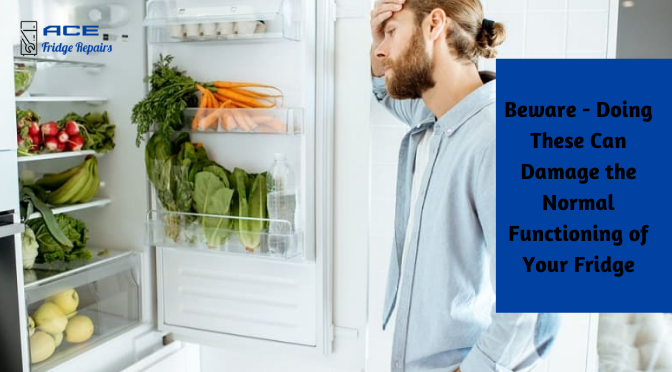
Fridges are built to run for years, but some everyday habits quietly shorten their life, push up power bills and lead to repairs that could have been avoided. Most of them are easy to fix once you know about them.
Things That Damage Your Fridge: The Short Answer
The most common habits that damage a fridge are overpacking it and blocking the vents, never cleaning the condenser coils, ignoring worn or dirty door seals, chipping ice with a knife, switching it on and off repeatedly, skipping water filter changes, installing it without ventilation, and ignoring small warning signs. Each one makes the compressor work harder or causes a specific part to fail early.
10 Mistakes That Can Damage Your Fridge
1. Overpacking and blocking vents
Cold air needs to circulate. Overfilled shelves and containers pushed against the vents create warm spots, make the fridge run longer and can cause frost build-up. See why overloading a fridge causes problems.
2. Never cleaning the condenser coils
Dust and grease on the coils trap heat, so the compressor runs hotter and longer. This is one of the biggest contributors to compressor failure. Vacuum the coils every six to twelve months with the fridge switched off at the wall.
3. Ignoring worn or dirty seals
A dirty or split seal lets warm, humid air in all day. That causes frost, condensation, higher power use and extra wear. Clean seals regularly and replace them when they no longer grip.
4. Chipping ice with a knife or sharp tool
This is a common and expensive mistake. A knife can puncture the evaporator or the freezer liner, causing a refrigerant leak that often costs far more to fix than the ice was worth. Always let ice melt naturally.
5. Switching the fridge on and off repeatedly
Turning the fridge off and straight back on can make the compressor try to start against high pressure, which strains the compressor and start components. If you need to switch it off, leave it off for several minutes before restarting, or follow the manual.
6. Skipping water filter changes
On fridges with a dispenser or ice maker, an overdue filter can restrict flow, affect ice production and water quality, and contribute to leaks. Use a filter that suits your model and change it on schedule.
7. Poor installation
A fridge jammed into a tight cavity, next to an oven or in direct sun runs much harder than it should. Leave the ventilation gaps recommended in the manual.
8. Putting lots of hot food in at once
Large pots of hot food raise the temperature inside and make the compressor work hard. Divide food into shallow containers so it cools quickly. See can you put hot food in the fridge.
9. Slamming or hanging on doors
Heavy door shelves, slamming and children swinging on doors wear hinges and seals, and can knock doors out of alignment.
10. Ignoring early warning signs
New noises, frost on the back wall, leaks and rising temperatures are usually cheaper to fix early. A failed fan or defrost part left for months can overwork the compressor.
Noticed one of these problems? Call Ace Fridge Repairs on 0452 462 556.
What to Do Instead
- Keep shelves moderately full with vents clear.
- Clean coils and seals on a regular schedule.
- Let ice melt naturally when defrosting.
- Give the fridge ventilation space.
- Book a repair when something changes.
Our fridge maintenance checklist puts all of this into a simple routine.
Fridge Repairs Across Sydney
If one of these habits has already caused a problem, Ace Fridge Repairs can help. We service Greater Sydney, including Cecil Hills, St Marys, Kingswood and Wetherill Park, from 93B Pagoda Crescent, Quakers Hill NSW 2763, with a 12-month warranty on parts and labour.
For residential or commercial fridge repairs, call 0452 462 556, 24/7.
Frequently Asked Questions
What damages a fridge the most?
Heat and dust on the condenser coils, worn seals, blocked vents and faults left unrepaired all make the compressor work harder. Chipping ice with a knife is a common cause of expensive refrigerant leaks.
Is it bad to turn a fridge off and on?
Restarting immediately can strain the compressor. If you switch it off, leave it off for several minutes before restarting, or follow your manual.
Can using a knife on ice damage my freezer?
Yes. It can puncture the evaporator or liner and cause a refrigerant leak. Always let ice melt naturally.