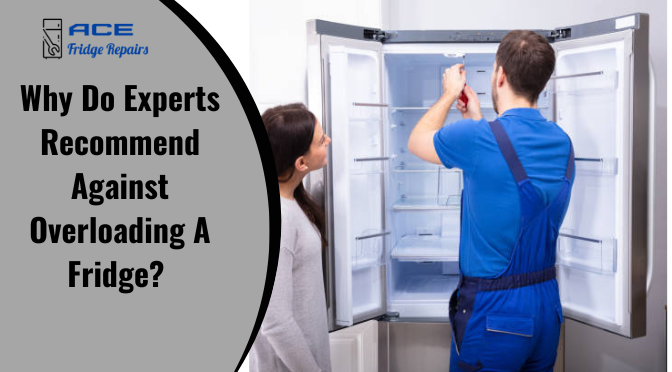
It is tempting to squeeze in one more container after a big shop. But a fridge that is packed to the brim does not just look cluttered. It cools unevenly, uses more power and can end up with frozen spots, warm spots and extra wear on the compressor.
Is It Bad to Overload a Fridge? The Short Answer
Yes. An overloaded fridge blocks the cold air vents and stops air circulating, so some areas get too warm while others freeze. The compressor runs longer to compensate, which increases power use and wear. Food near the door or at the back can sit at unsafe temperatures. A moderately full fridge with space around the vents works best.
What Happens When You Overload a Fridge
Air cannot circulate
Most fridges push cold air from the freezer area through vents into the fridge. When those vents are blocked, cold air cannot reach every shelf. The result is warm pockets and inconsistent temperatures.
The compressor works harder
With poor airflow, the fridge takes longer to reach its set temperature, so the compressor runs longer. Over time this adds wear and can shorten its life.
Power bills go up
Longer run times mean more electricity. See our power saving tips for more.
Food safety risks
Warm pockets can let perishable food sit above safe temperatures. As general guidance, perishable food should be kept at 5 degrees Celsius or below. The NSW Food Authority has more detailed advice.
Freezing near the vents
Items pressed against the cold air vent can freeze solid while food elsewhere stays warm.
Frost and ice in the freezer
An overfilled freezer can stop the door sealing and restrict airflow over the evaporator, leading to frost build-up. See frost build-up in the freezer.
Door and seal damage
Heavy door shelves and items that stop the door closing strain hinges and seals.
Odours and waste
When food is hidden at the back, it is easy to forget until it spoils, which leads to smells and mould. See our guide to preventing mould in your fridge.
Fridge still warm even after you have cleared some space? Call Ace Fridge Repairs on 0452 462 556.
How to Load a Fridge Properly
- Keep the vents clear. Check your manual for where they are.
- Leave small gaps between items so air can flow.
- Do not push food against the back wall.
- Keep door shelves for condiments and drinks, not heavy bulk items.
- Use the crisper drawers for fruit and vegetables.
- Put leftovers in shallow, covered containers.
- Rotate food so older items are used first.
What About an Empty Fridge?
A nearly empty fridge is not ideal either, because it loses cold air quickly every time the door opens. A moderately full fridge holds temperature best.
Fridge Repairs Across Sydney
If your fridge is still not cooling evenly after sorting out the load, there may be a fan, defrost or sensor fault. Ace Fridge Repairs attends homes across Greater Sydney, including St Marys, Kingswood, Wetherill Park and Ryde, from 93B Pagoda Crescent, Quakers Hill NSW 2763. Read about why a fridge stops cooling.
For residential fridge repairs, call 0452 462 556, 24/7.
Frequently Asked Questions
Is it bad to overfill a fridge?
Yes. Overfilling blocks air vents, causes uneven temperatures, increases power use and makes the compressor work harder.
Should a fridge be full or empty?
Moderately full is best. An overfilled fridge restricts airflow, while a nearly empty fridge loses cold air quickly when the door opens.
Why is food freezing at the back of my fridge?
Food pressed against the cold air vent at the back can freeze. Move it forward and leave space around the vent.