A fridge that is running but not cooling is one of the most common appliance problems in Sydney homes. It usually starts gradually: milk goes off a day early, drinks are not quite cold, the crisper feels cool rather than cold. Left alone, it can end with spoiled food and a much bigger repair.
This guide covers why a fridge stops cooling, the checks you can do in ten minutes, and the warning signs that mean it is time to call a technician.
Fridge Not Cooling: The Short Answer
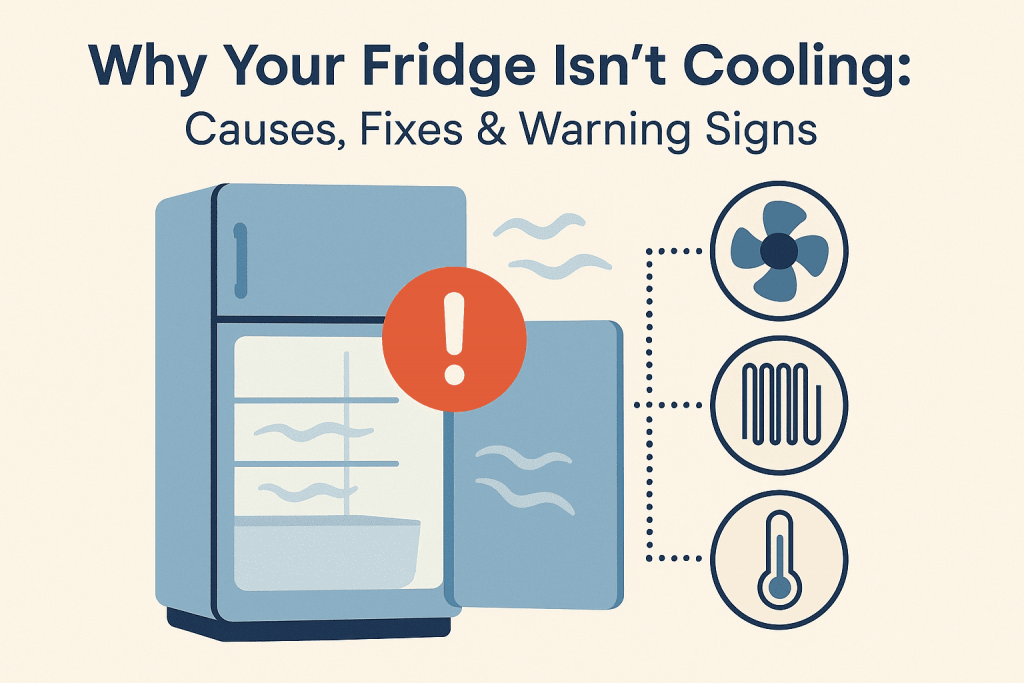
When a fridge is not cooling, the most common causes are a temperature setting that has been changed, blocked vents from overpacking, dirty condenser coils, a worn door seal, an iced-up evaporator from a defrost fault, a failed evaporator or condenser fan, or a compressor or start relay problem. Start with the settings, vents, seals and coils. If the fridge still will not cool, and especially if the freezer is cold but the fridge is warm, a fan or defrost fault is likely and needs a technician.
First, Check Which Part Is Warm
The pattern of warmth narrows the cause quickly:
- Fridge warm, freezer cold: usually an evaporator fan, defrost fault or stuck air damper. See our detailed guide on fridge not cooling but freezer works.
- Freezer warm, fridge cold: often a defrost, fan or sensor fault. See fridge cold but freezer warm.
- Both warm: often the compressor, start relay, condenser fan, control board or a refrigerant problem.
- Warm in some spots only: blocked vents or overpacking.
8 Common Reasons Your Fridge Is Not Cooling
1. Incorrect temperature setting
Settings can be bumped during cleaning, changed by children or reset after a power outage. A fridge section should generally sit around 3 to 5 degrees Celsius. If you are unsure how your controls work, our guide on how to reset a fridge thermostat walks through it.
2. Blocked air vents
Cold air usually enters the fridge through vents from the freezer area. Containers pushed against the vents, overfilled shelves or ice around the vent opening stop air circulating.
3. Dirty condenser coils
The condenser coils at the back or underneath release heat from inside the fridge. When they are coated in dust or pet hair, the fridge cannot shed heat, runs longer and cools poorly.
4. Worn or dirty door seals
A cracked, hardened or greasy seal lets warm air in. Try the paper test: close the door on a sheet of paper. If it slides out easily, the seal is not sealing.
5. Defrost system fault
If the defrost heater, sensor or control fails, ice builds up on the evaporator coils behind the freezer panel and blocks airflow. Frost on the freezer back wall is a strong clue. Read more about fridge defrost problems.
6. Evaporator fan failure
The evaporator fan pushes cold air around the fridge. If it stops, the freezer may stay cold while the fridge warms up. A squeal, or silence where you usually hear a fan, can be a clue.
7. Condenser fan failure
On many fridges, a fan near the compressor cools the condenser. If it fails, the fridge overheats and cooling drops across both compartments.
8. Compressor, relay or control board problems
Clicking every few minutes, a silent compressor, or a compressor that is very hot can indicate a relay, board or compressor fault. Our guide on signs of a bad fridge compressor explains the symptoms.
Still not cooling after the basic checks? Call Ace Fridge Repairs on 0452 462 556 for same-day help where available.
10-Minute Checks You Can Do Now
- Confirm the fridge has power and the display or light is working.
- Check the temperature settings for both compartments.
- Move items away from the air vents and do not overfill shelves.
- Do the paper test on the door seals and clean them with warm soapy water.
- Make sure the fridge has clearance at the back and sides, and is not next to an oven or in direct sun.
- With the fridge switched off at the wall, vacuum the condenser coils.
- Look for frost on the freezer back wall.
- Give the fridge 12 to 24 hours after any change to settle.
Warning Signs to Act on
- food spoiling before its use-by date
- frost on the freezer back wall
- clicking, buzzing or grinding noises
- the fridge running constantly. See why a fridge runs all the time
- the outside of the fridge feeling much hotter than usual
- error codes or temperature alarms. See our fridge error codes guide
As general guidance, perishable food should be kept at 5 degrees Celsius or below. If your fridge cannot hold that, move high-risk food to another fridge or an esky and refer to the NSW Food Authority for food safety advice.
How We Fix a Fridge That Is Not Cooling
Our technicians check settings and airflow, inspect the evaporator for ice, test the evaporator and condenser fans, defrost components, sensors and control board, and check the compressor and start components. Sealed system work, including refrigerant leak detection and regassing, is carried out by ARC-licensed technicians. We explain the fault and the repair before starting, and all work is covered by a 12-month warranty on parts and labour.
Tips to Keep Your Fridge Cooling Well
- Vacuum the condenser coils every six to twelve months.
- Keep vents clear and avoid overpacking.
- Check seals regularly and keep them clean.
- Let hot food cool before refrigerating it.
- Give the fridge the ventilation space the manual recommends.
Fridge Cooling Repairs Across Sydney
Ace Fridge Repairs is based at 93B Pagoda Crescent, Quakers Hill NSW 2763 and repairs fridges across Greater Sydney, from Blacktown and the Hills District to Bondi and the Sutherland Shire. We service most major brands and all the suburbs we cover.
For residential fridge repairs or commercial refrigeration repairs, call 0452 462 556, 24/7.
Frequently Asked Questions
Why is my fridge running but not cooling?
Common causes include blocked vents, dirty condenser coils, a worn door seal, a defrost fault that has iced up the evaporator, or a failed evaporator or condenser fan. If the compressor clicks without starting, the relay or compressor may be faulty.
What temperature should my fridge be?
As a general guide, the fridge section should sit around 3 to 5 degrees Celsius and the freezer around minus 18 degrees Celsius.
Why is my freezer cold but my fridge warm?
This usually points to an evaporator fan fault, a defrost fault blocking airflow, or a stuck air damper between the compartments.
How long should a fridge take to cool down?
Most fridges take several hours to reach temperature after being switched on, and up to 24 hours to fully stabilise. If it is still warm after that, have it checked.
Can dirty coils stop a fridge from cooling?
Yes. Dirty condenser coils stop the fridge releasing heat, so it runs longer and cools poorly. Cleaning them with the power off is a simple fix.
When should I call a technician for a fridge not cooling?
Call if basic checks do not help, if there is frost on the freezer back wall, if you hear clicking or grinding, or if food is not staying at safe temperatures.